
Choosing Acupuncture EHR and Practice Management Software: 10 Questions to Ask
Pure Digits Inc. · Updated · 6 min read
Short answer
Ask whether the software charts acupuncture the way you practice, turns that chart into a payer-ready note and claim, and connects booking, payment and billing. Then check support, price and what you can take with you if you leave.
How to read this list
These are the questions acupuncturists raise most often when they compare software: in practitioner discussions on Reddit, in user reviews on Software Advice, and in what state boards say about records. Where a question comes from a source we can link, we link it. Reddit threads change daily, so we describe them rather than quote them.
Each question has three lines: where it comes from, what it costs a clinic that gets it wrong, and what Qihuang AI does about it. We say plainly where it does not do something. A table at the end sums it up.
1. Does it understand acupuncture and TCM, or force a generic template?
- Where it comes from: acupuncturists comparing software on Reddit ask whether it supports acupuncture-specific charts and forms, and complain that generic templates fit badly and make history-taking slow.
- What it costs the clinic: a generic template turns every note into free text. Notes take longer, and tongue, pulse, points and pattern end up buried in paragraphs nobody can search or compare between visits.
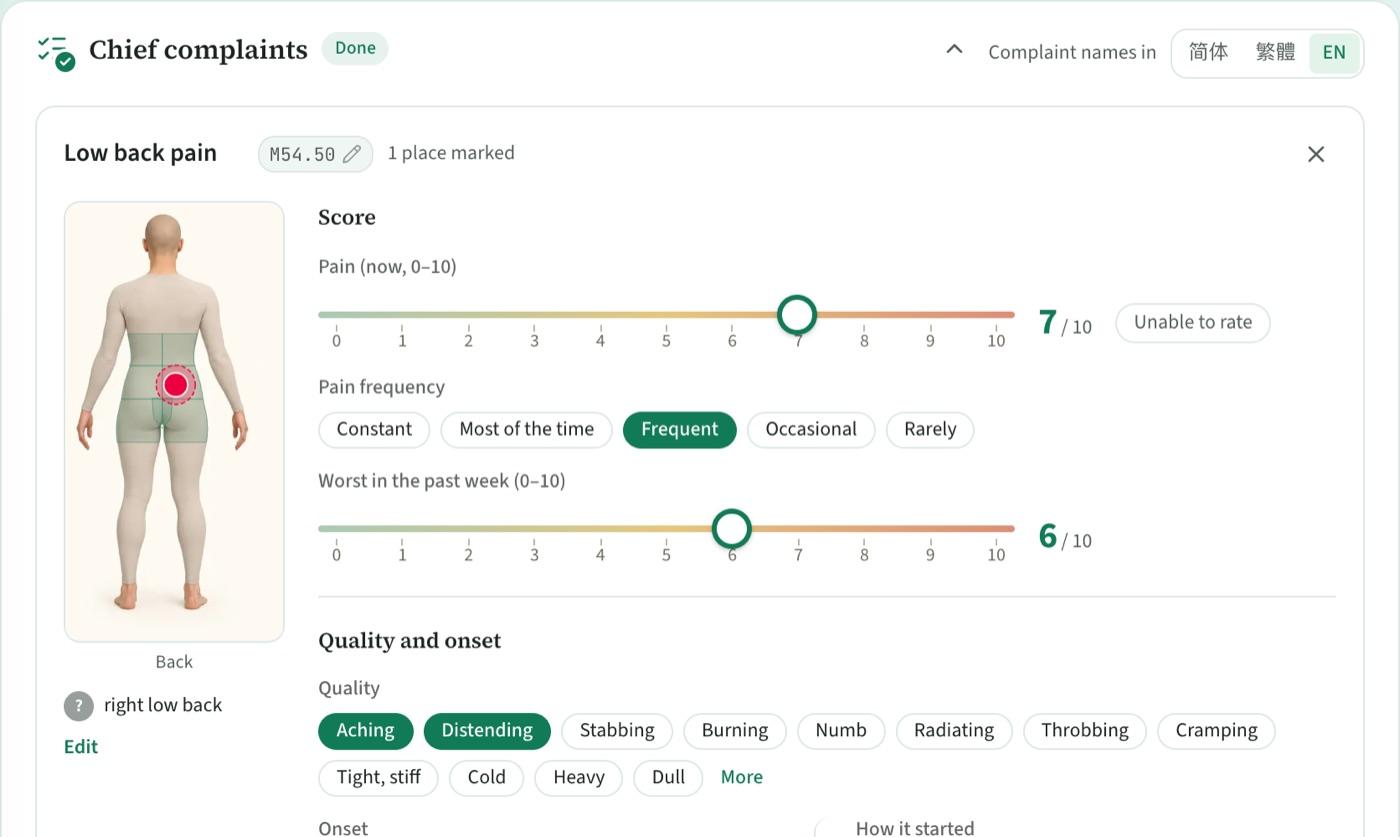
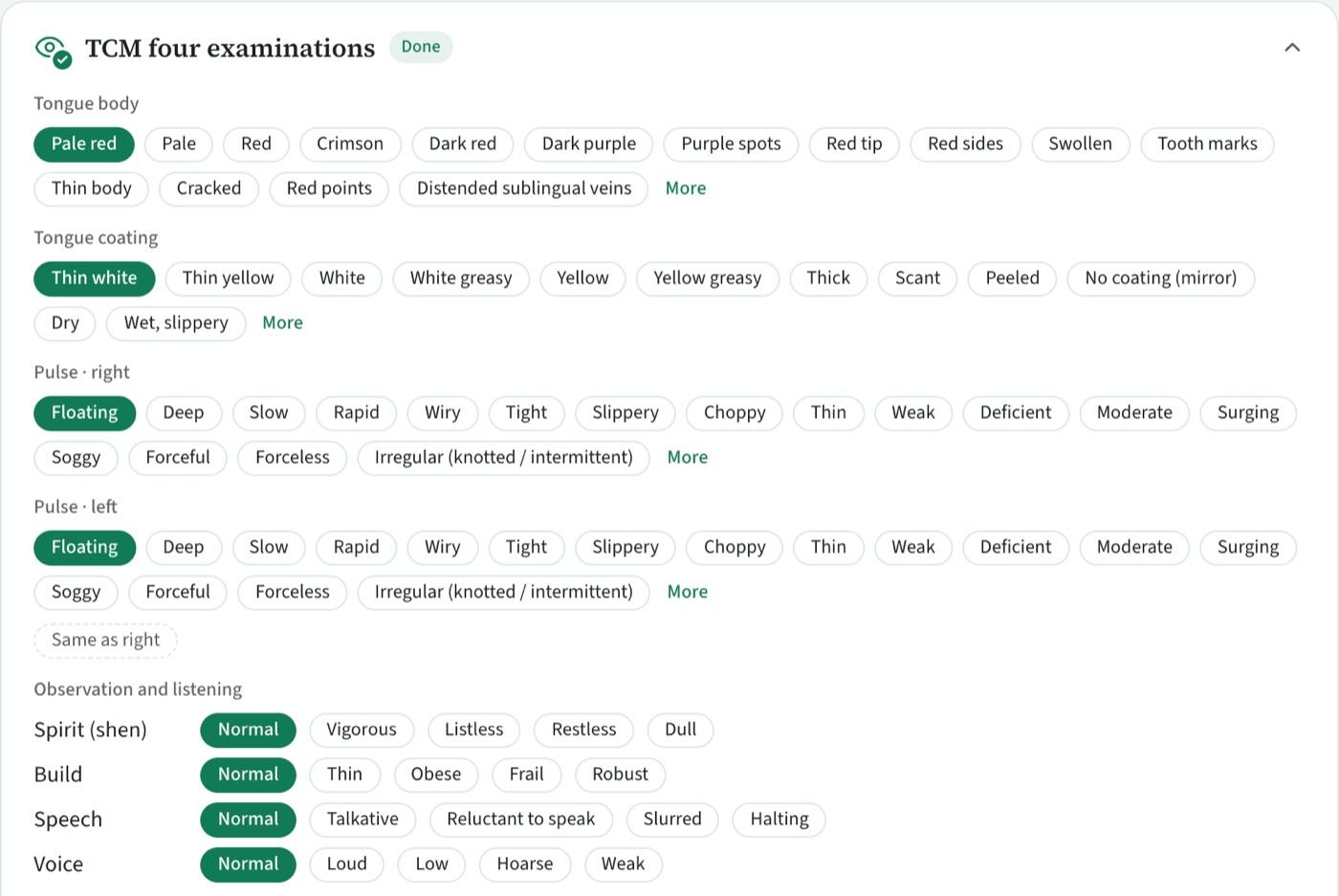
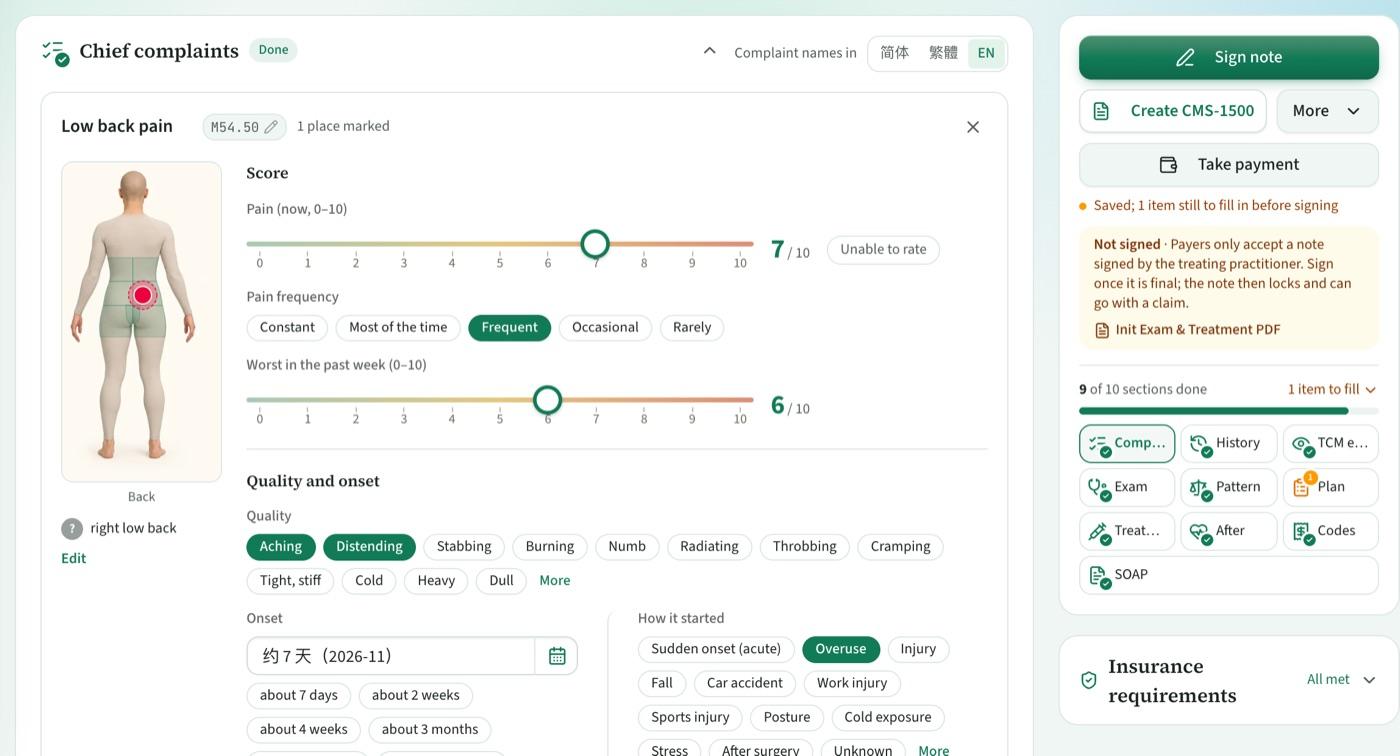
- How Qihuang AI handles it: the visit record has a problem list with a body chart (left and right side, 0 to 10 score per area), tongue body and coat, pulse, pattern differentiation, and points with side and technique. Techniques include needling, electro, auricular and scalp, plus infrared, tuina, cupping, moxa and gua sha. Fields can be switched on or off to match how the clinic works. It is not a free-form form designer.
2. Can SOAP notes be written fast and still be complete?
- Where it comes from: the Maryland State Acupuncture Board publishes a documentation standard. Each dated treatment gets a SOAP note, the Assessment should give East Asian and Western differential diagnoses for the major new problem, and the Plan should list the points used, any accessory techniques, the number of treatments planned before re-evaluation, and patient education. The Board's newsletter adds that a properly documented record helps a licensee when a complaint is investigated. Other states have their own rules.
- What it costs the clinic: a thin note is a licensing risk and a claim risk, since payers read the same note. A complete note written after hours is a cost too, paid in the practitioner's evenings.
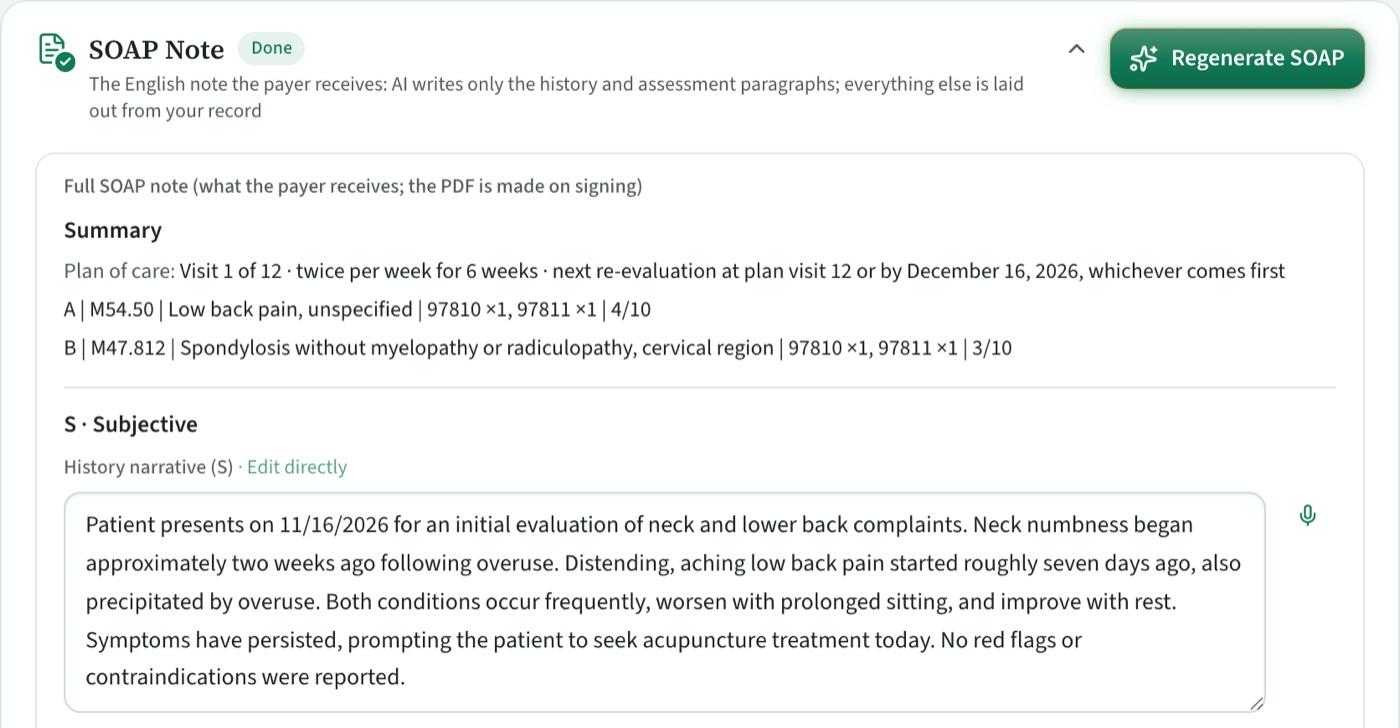
- How Qihuang AI handles it: tap or dictate, and AI drafts the English SOAP note from what you recorded. Follow-ups compare against the last visit, a note that reads too much like the previous one is flagged, and a checklist shows what is missing before you save. A signed note is locked. Reopening it requires a reason, and earlier versions are kept. You review and sign every note. Check the draft against your own state board's standard.
3. Do eligibility, coding, claims and denials work as one flow?
- Where it comes from: in practitioner discussions, some clinics pick one tool for booking and charting and a separate one for insurance. Reviewers also mention limits in how payments and denials are handled, such as not being able to bring insurer remittances in.
- What it costs the clinic: every handoff between systems is a place to retype data, and retyped member IDs and NPIs are a common reason claims bounce.
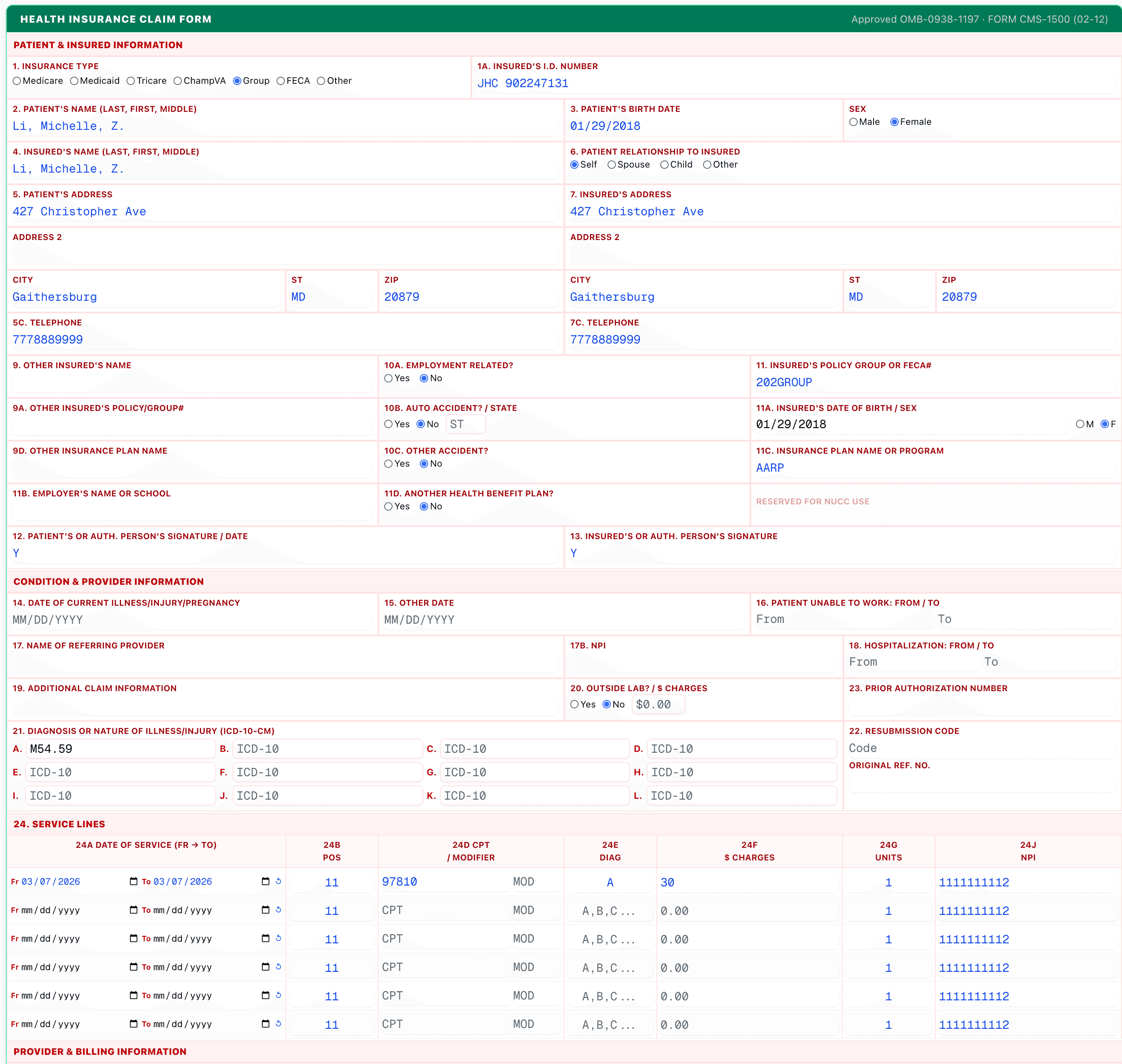
- How Qihuang AI handles it: eligibility check from the patient file, CMS-1500 filled from the signed note, submission to Claim.MD, status and rejection reasons on the claim, and the ERA pulled back once the payer pays. Denied claims are corrected and resubmitted in the same place. Prior authorizations and benefit usage are tracked per insurance. Submission connects to Claim.MD only.
4. Is scheduling flexible enough to cut front-desk back and forth?
- Where it comes from: acupuncturists comparing software put "easy to schedule" and "patients can book themselves" near the top of their lists.
- What it costs the clinic: a rigid calendar means phone calls and manual fixes for every new patient, longer first visits, a double-booked room or a practitioner on holiday.
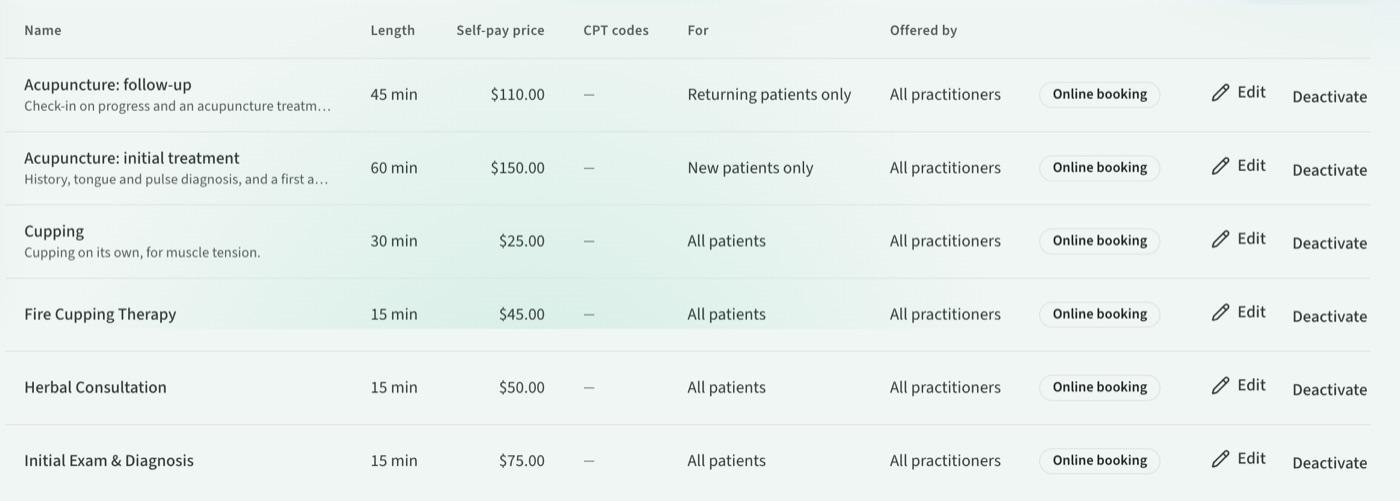
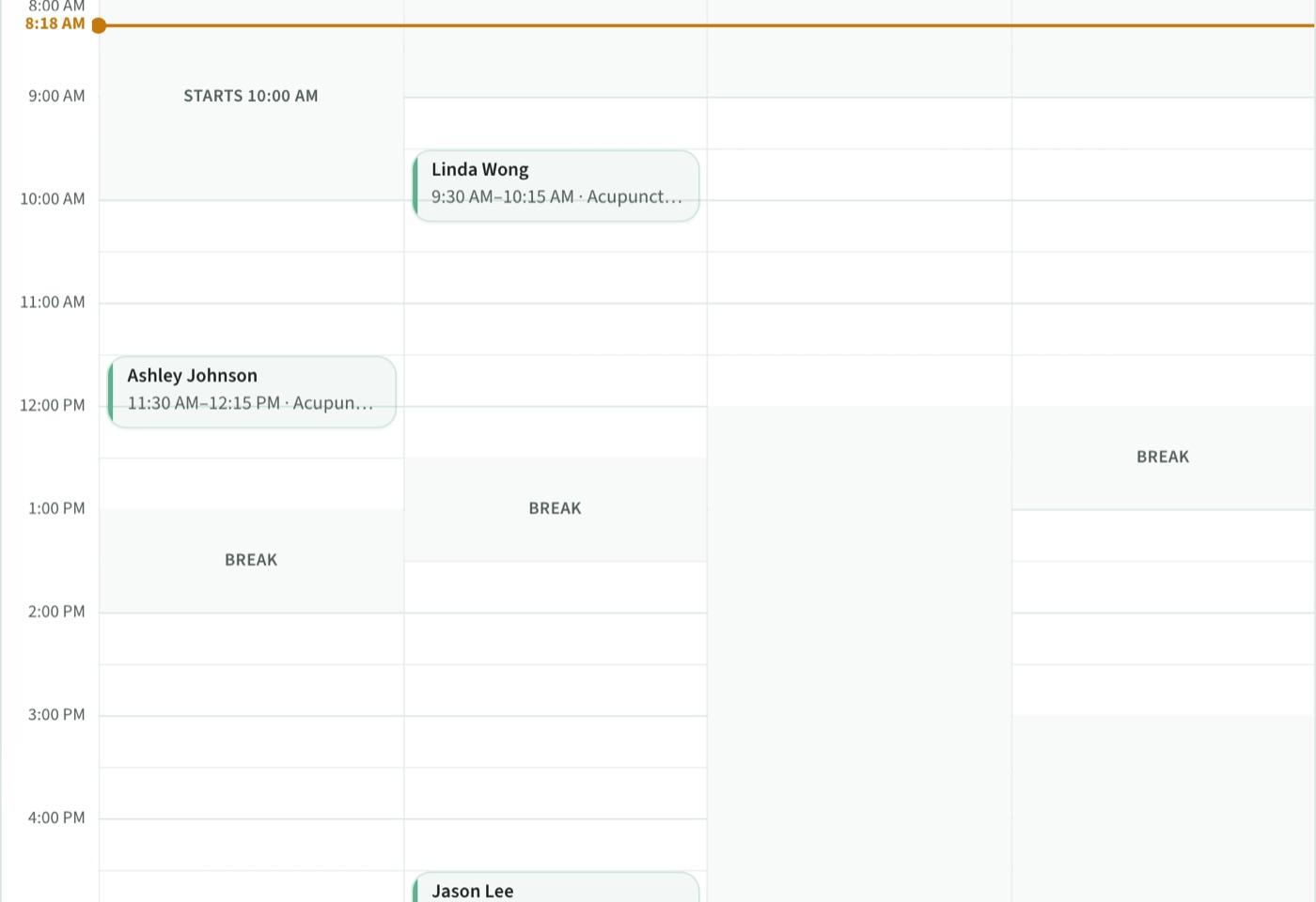
- How Qihuang AI handles it: working hours per practitioner, extra hours, time off, different lengths for first and returning visits, treatment rooms and electro-stim devices held while a visit runs, and online booking. Patients can also book through their own AI assistant, and the booking waits for their email confirmation. There is no waitlist yet.
5. Do booking, notes, payment and claims really connect?
- Where it comes from: practitioners separate software that only manages patients and charts from software that also runs billing, payments, inventory and insurance, and ask whether one visit flows through all of it.
- What it costs the clinic: if the pieces don't connect, the same visit is entered in several places, and someone has to check that they agree.
- How Qihuang AI handles it: an appointment becomes a visit note, the visit carries its own payments, and the visit's claim bills that same visit. The visit shows what was paid and what is still owed.
6. Is the patient side easy enough to reduce front-desk work?
- Where it comes from: acupuncturists ask about online intake forms, e-signature, a patient portal, reminders and cancellation notices.
- What it costs the clinic: paper forms and phone reminders are front-desk hours. A booking process patients struggle with also costs bookings.
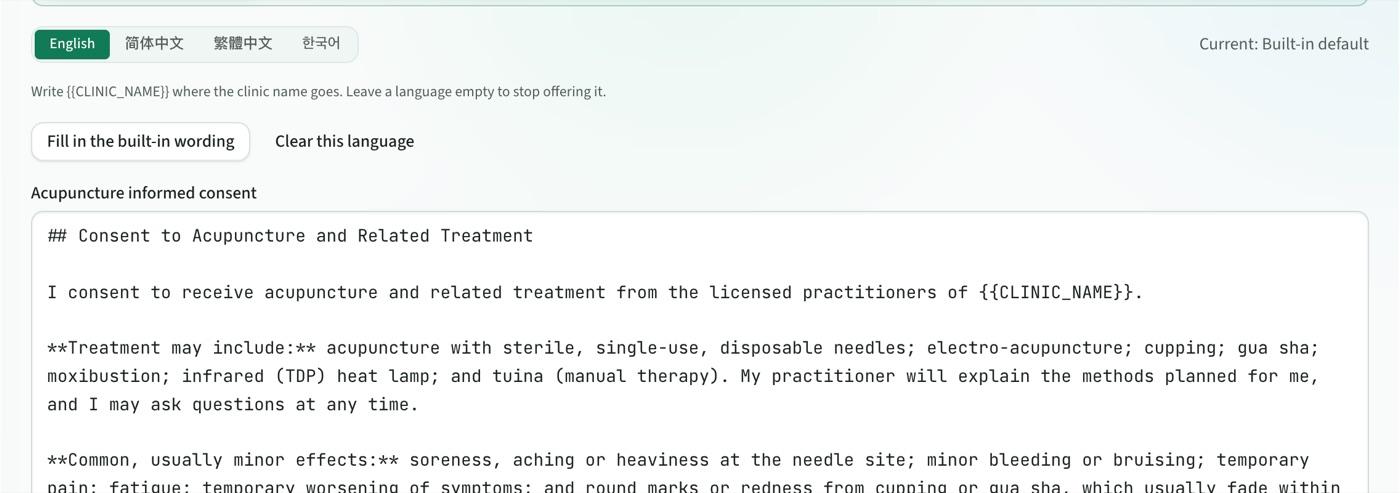
- How Qihuang AI handles it: a patient portal where patients view and cancel appointments, update contact details and see documents and records. Consent forms are signed on a tablet, in Simplified Chinese, Traditional Chinese, English or Korean. Reminders go by email with a cancel link. There are no text-message reminders and no general-purpose intake forms yet.
7. Can I see payments, insurance balances and prepaid care clearly?
- Where it comes from: user reviews on Software Advice show clinics confused about money coming in and out when billing sits in a different system from the schedule and the chart.
- What it costs the clinic: unclear balances mean undercharged copays, forgotten patient balances, and arguments with patients about what they owe.
- How Qihuang AI handles it: cash, card (through Square) and check; receipts, refunds and sales tax; a patient estimate of their share before the payer answers; the actual patient share from the ERA after; and an account credit for overpayments. Each visit shows what was paid and what is left. Treatment packages and prepaid visit bundles are not supported.
8. If I sell herbs or products, can inventory and prescriptions live in the same place?
- Where it comes from: some clinics need herb, formula and product records and stock. Others only want charting and don't want to pay for features they won't use.
- What it costs the clinic: a clinic that sells herbs on paper or a spreadsheet loses track of stock and sales. A clinic that doesn't sell any pays for tools it never opens.
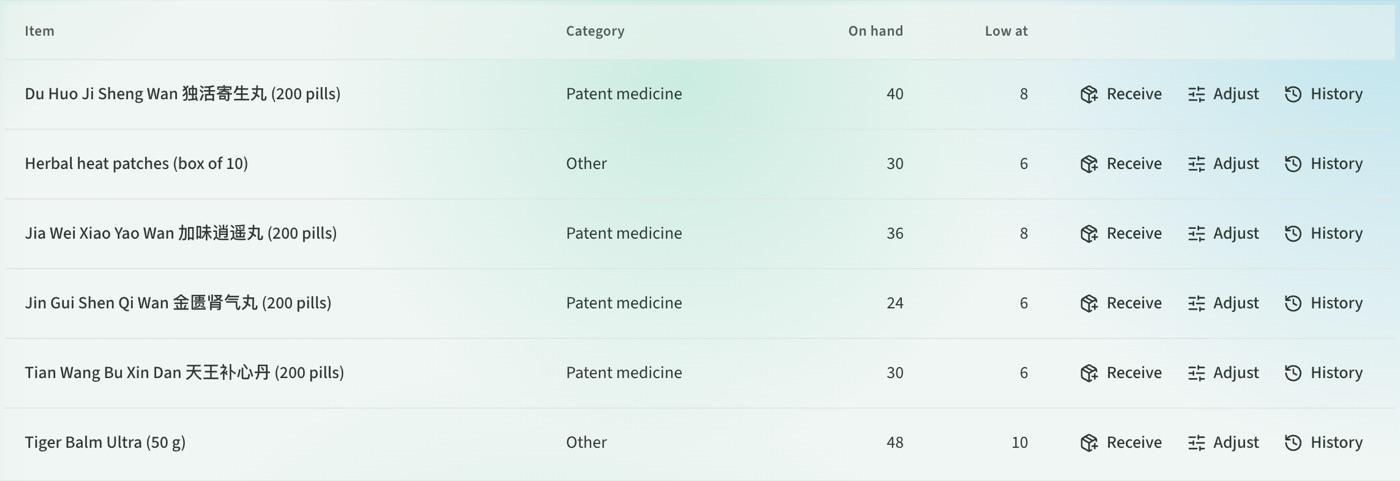
- How Qihuang AI handles it: a price list for herbs, patent medicines and other goods, stock tracking with a low-stock flag, and receiving, sale, void and adjustment records. It has no herbal prescription or formula tools and no link to outside herbal suppliers. A clinic that writes many herbal prescriptions should look for software built around them.
9. What happens when something breaks, and does support answer?
- Where it comes from: user reviews on Software Advice, across many vendors, repeat the same two complaints: the system down during business hours, and support that is hard to reach. Reviewers praise fast replies just as often.
- What it costs the clinic: if the schedule or billing is down at 10 a.m., patients are waiting at the desk.
- How Qihuang AI handles it: support is available 9:00 a.m. to 6:00 p.m., and about 70% of questions get a reply within 4 hours. The rest take longer. That is our own figure, not an outside audit. Whatever vendor you consider, ask for the support hours, a typical response time and a record of past outages.
10. What do price, extra fees, and leaving cost?
- Where it comes from: small clinics compare the monthly fee, whether features cost extra, and what each added practitioner adds. Some say they chose a low price and an easy exit when they opened.
- What it costs the clinic: the listed price is rarely the whole bill. Insurance billing, AI features, a website and extra practitioners are the usual add-ons.
- How Qihuang AI handles it: $69/month includes one provider, and each added provider is $39/month. Insurance billing is included. AI use beyond each provider's free monthly allowance is billed per use. Credentialing is $300 per payer. Claim.MD charges its own per-claim fees, paid to Claim.MD with no markup from us. Any patient's record can be exported as a ZIP with a machine-readable file and the visit notes as PDFs, one patient at a time. Whatever vendor you pick, ask how your data is backed up.
At a glance
| Question | Qihuang AI | What to check with any vendor |
|---|---|---|
| 1. Acupuncture and TCM charting | Yes | Points with side, tongue, pulse, pattern, techniques, editable fields |
| 2. Fast, complete SOAP notes | Yes | Does it meet your state board's note standard? |
| 3. Eligibility to ERA as one flow | Yes | Which clearinghouse, and can you fix and resubmit denials in place? |
| 4. Flexible scheduling | Partly: no waitlist | Visit length by type, rooms, time off, online booking |
| 5. Booking to claim connected | Yes | Is one visit entered once? |
| 6. Patient side | Partly: no text reminders, no intake forms | Portal, e-signature, reminders |
| 7. Payments and balances | Partly: no prepaid packages | Copays, self-pay, balances, refunds |
| 8. Herbs and inventory | Partly: stock yes, prescriptions no | Do you prescribe herbs? |
| 9. Support and uptime | Support 9 to 6, about 70% answered within 4 hours | Hours, response time, outage history |
| 10. Price and leaving | Published prices, per-patient export | Add-on fees, extra practitioners, how you get records out |
Frequently asked questions
- What is the most important thing to check when choosing acupuncture EHR software?
- Whether one visit flows from the chart to a payer-ready note to the claim without retyping. Features matter less than whether the steps connect.
- Is a general medical EHR good enough for an acupuncture clinic?
- It can work for a clinic that bills no insurance and writes short notes. For insurance billing, acupuncture-specific records such as points, tongue, pulse, pattern and timed treatments save time and make claims easier to support.
- How much does Qihuang AI cost?
- Software alone is $69/month including one provider, plus $39/month for each additional provider, with an AI allowance per provider. If we file your claims, it is 7% of what insurers actually pay with a $299/month minimum, and the EHR is included.
Sources
General information only, not legal, coding or billing advice. Payer policies and contracts vary and change; verify with the payer, your MAC, or a qualified advisor.
Related reading
- Is Jane App the right fit for your acupuncture clinic?
- Unified Practice vs Qihuang AI: Built for Acupuncture, but You Fill In Every Field
- Qihuang AI vs AcuBliss: which fits your U.S. acupuncture clinic?
- Choosing an Acupuncture Billing Service: Five Options, Their Fees and Who Each Fits
- Acupuncture EHR
- Pricing